
Table of Contents
DoubleZero has announced the start of Phase II of the DoubleZero Delegation Program (DZDP), a new stage of its validator support initiative designed to expand Solana’s geographic footprint and improve network performance.
The phase will begin on March 9, 2026, alongside the rollout of a major infrastructure upgrade introducing multicast networking to the Solana ecosystem.
The program will distribute additional delegated stake to validators operating in regions where Solana infrastructure has historically been underrepresented, while also incentivizing adoption of the new multicast data propagation system.
What DoubleZero Is Building
DoubleZero is an infrastructure protocol designed to improve the physical networking layer that blockchains rely on. Instead of depending solely on the public internet, which can introduce latency spikes and bandwidth constraints, the project connects underutilized private fiber networks into a dedicated high-performance routing layer for distributed systems.
Specialized edge hardware and routing infrastructure help filter spam traffic, verify signatures, and route blockchain data through faster and more predictable network paths. The goal is to provide blockchain validators with lower latency, higher throughput connectivity optimized for real-time distributed applications such as high-performance blockchains.
By improving the underlying networking layer, DoubleZero aims to address one of the long-standing bottlenecks in blockchain infrastructure: how quickly data can propagate across globally distributed validator networks.
Expanding Solana’s Geographic Validator Footprint
The DoubleZero Delegation Program was originally created to strengthen both decentralization and performance on Solana by delegating stake to validators participating in the DoubleZero network.
At the end of 2025, the delegation pool supporting the program expanded from 3 million SOL to 13 million SOL, giving the initiative enough scale to pursue broader infrastructure goals.
Phase II focuses heavily on geographic expansion. Currently, more than half of Solana’s stake remains concentrated in European infrastructure hubs such as Amsterdam, Frankfurt, and London. That concentration can create network imbalances and latency disadvantages for validators operating in other regions.
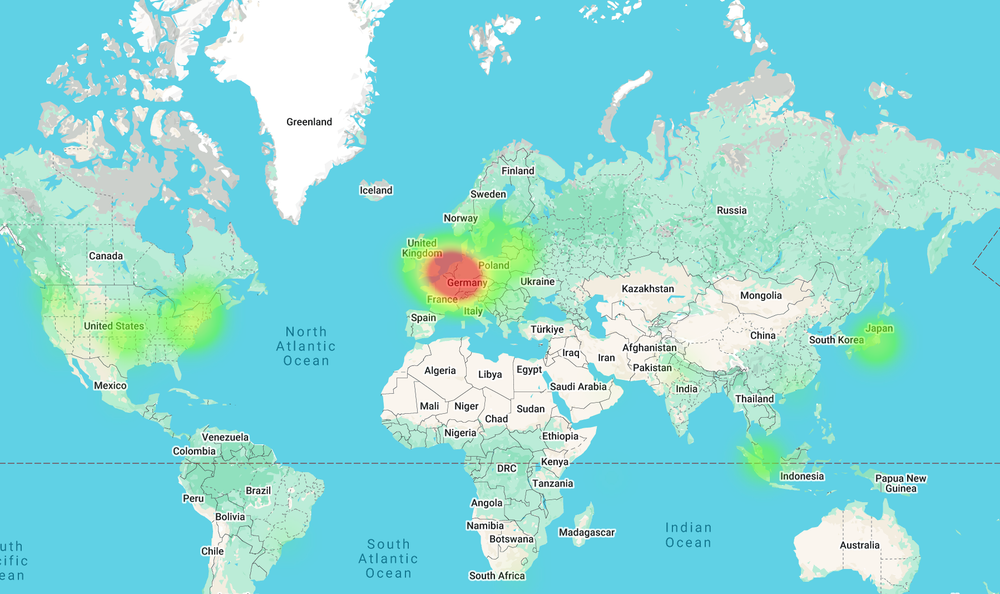
To address that imbalance, 2.4 million SOL from the delegation pool will be directed to validators operating in four priority regions: São Paulo, Singapore, Hong Kong, and Tokyo. Each location may receive up to 600,000 SOL in delegated stake, distributed proportionally among DoubleZero-connected validators based on stake weight.
The initiative is designed to make it financially viable for validators to operate infrastructure in regions that historically faced higher latency due to reliance on the public internet.
Introducing a Three-Ring Delegation Model
Phase II also introduces a new three-ring geographic incentive structure designed to gradually shift stake distribution toward underserved areas of the network.
The first ring represents traditional high-stake infrastructure hubs in Europe. Validators in these regions remain eligible for baseline delegation if they stay connected to the DoubleZero network.
The second ring includes cities across the United States, Canada, and India. Validators operating in these locations may receive additional delegation bonuses aimed at improving global coverage.
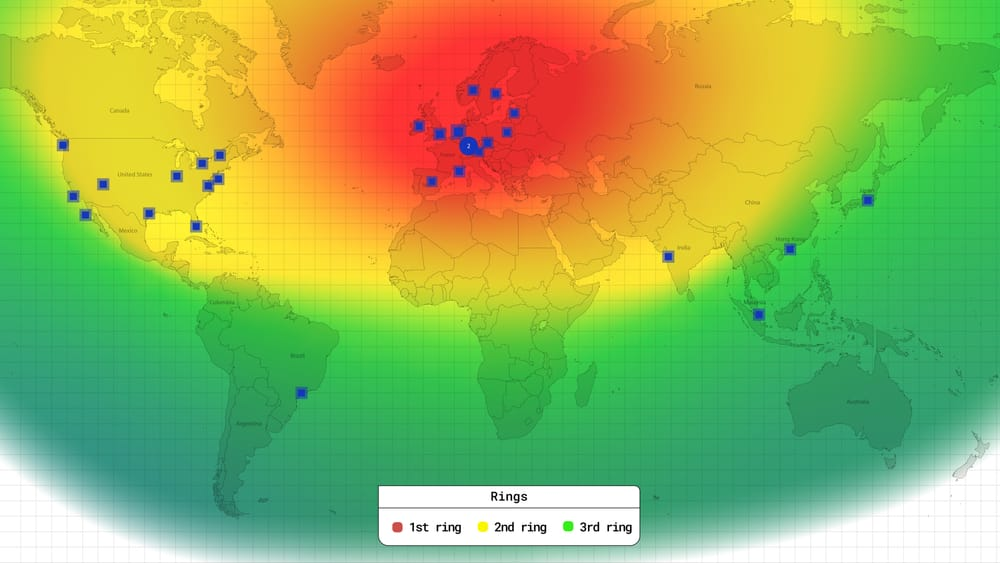
The third ring includes priority edge regions where infrastructure expansion could have the greatest impact on global network performance. These regions include Hong Kong, São Paulo, Singapore, and Tokyo, where validators may receive both decentralization incentives and additional device-level delegation bonuses.
The layered incentive model is designed to reward validators that expand into new regions while maintaining network performance standards.
Multicast Upgrade Goes Live
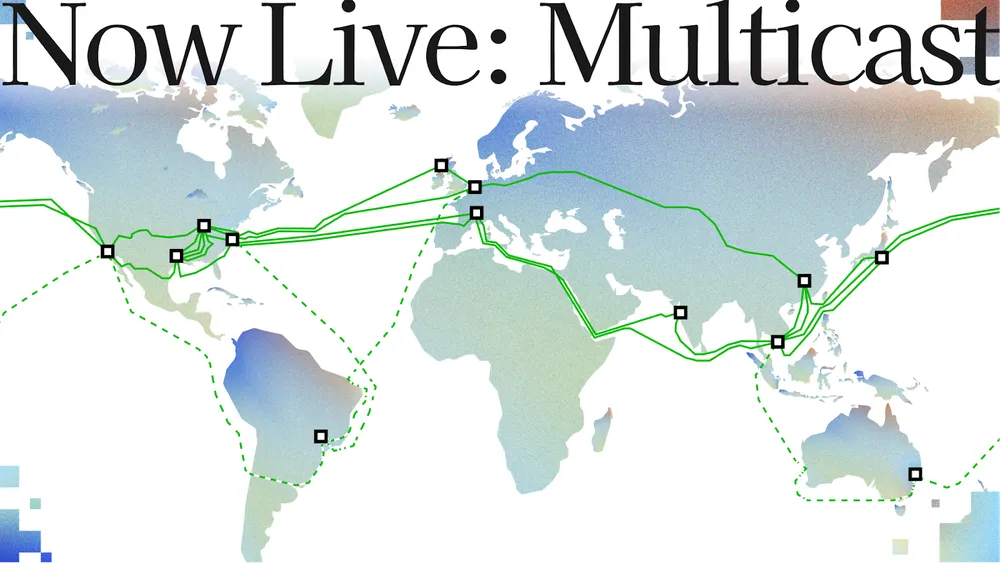
Alongside the delegation program changes, DoubleZero has launched multicast networking support, a technology widely used in traditional financial infrastructure but rarely applied in blockchain systems.
Multicast allows a single data transmission to reach multiple recipients simultaneously, rather than sending separate copies of the same data to each destination. In financial markets, this technology is commonly used by exchanges and trading firms to distribute real-time market data efficiently.
Solana’s current data propagation system, known as Turbine, relies on a layered relay model that sends data between nodes in stages. While effective, the structure assumes relatively small network latency differences and can create inefficiencies as validators become geographically dispersed.
Multicast changes that model by enabling one-to-many data distribution directly through the network infrastructure, allowing messages to reach multiple validators at nearly the same time.
For validators participating in the DoubleZero network, enabling multicast requires only a configuration change and no additional software development.
Participation in multicast will also be required for validators seeking to qualify for the geographic delegation bonuses introduced in Phase II.
A Push Toward Global Internet Capital Markets
The Phase II rollout reflects a broader DoubleZero effort to build infrastructure capable of supporting global, real-time financial activity on blockchain networks.
Solana’s long-term roadmap includes concepts such as Multiple Concurrent Leaders, where validators can process transactions closer to where users originate them rather than routing activity through centralized geographic clusters.
Expanding validator presence across more regions could reduce global latency, improve network resilience against localized outages, and increase transaction inclusion speeds for users worldwide.
With the introduction of multicast networking and a new delegation incentive model, DoubleZero is positioning its infrastructure as a key component in that global expansion.
IBRL.